Atlanta Airport Installs 4.5m LED Sphere Replacing Iconic Clock Tower
2026-09-22 · via Digital Signage Today
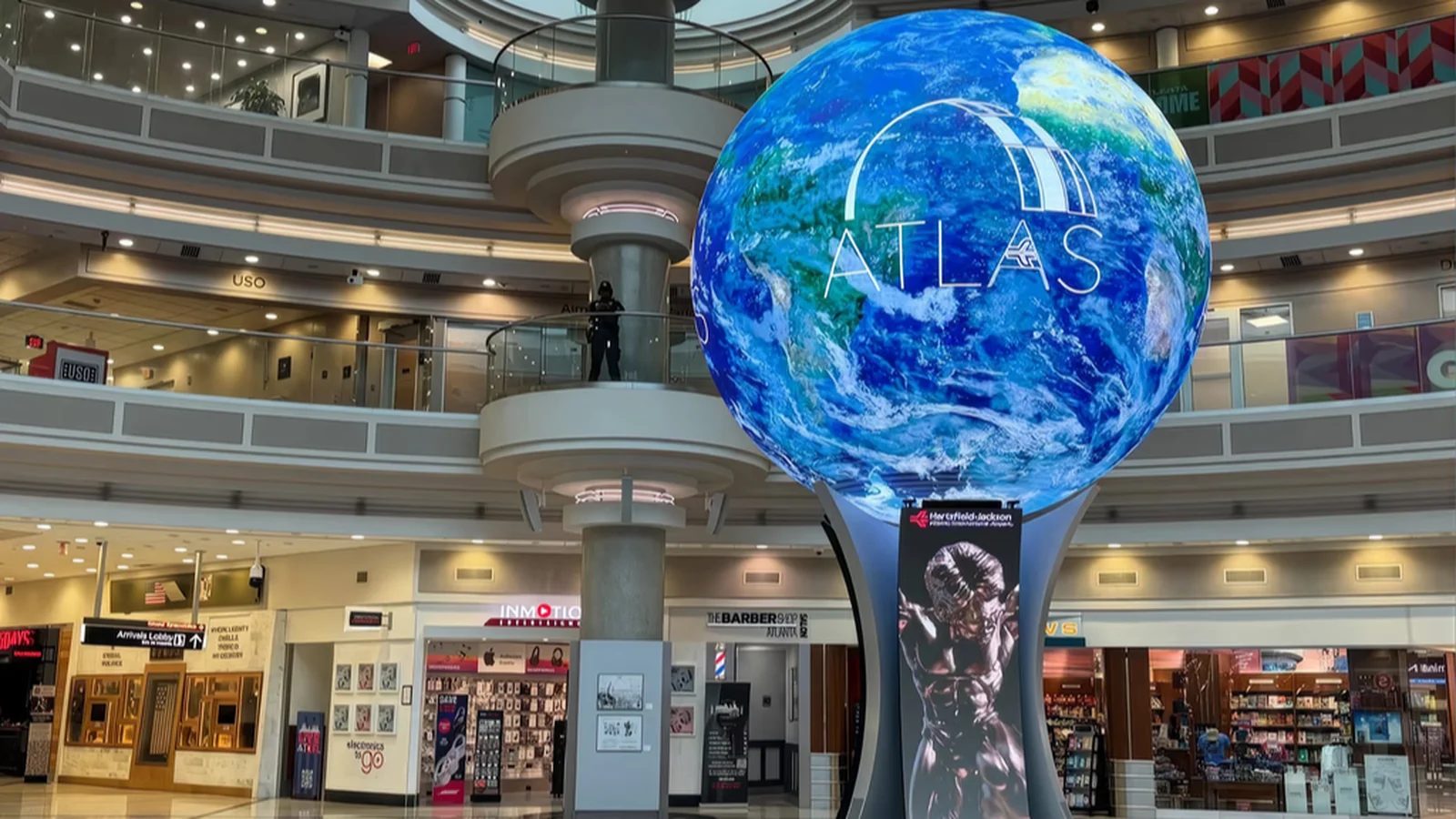
Hartsfield-Jackson Atlanta International Airport has replaced the clock tower that stood in its atrium for three decades with a 4.5-meter LED sphere called ATLAS. For an airport that moves more than 100 million passengers a year, that is a lot of eyeballs walking past a single fixed installation, and it signals how far airports are willing to go to turn a landmark into a media asset.
The airport worked with Capital Signs on the build, according to a press release. ATLAS runs on StudioDX, a media server and content management system, and is made up of four separate screens: the sphere itself plus three supporting LED displays in the domestic terminal atrium. Combined, the release states the installation carries more than 12.5 million LED pixels and includes a 360-degree audio system.
For operators, the technical detail worth noting is the pixel mapping. StudioDX handles precision pixel mapping across the sphere and the three flat displays so content can wrap continuously across all four surfaces, or the screens can run independently for separate content. The system supports playout of multiple sources up to 8K, live transformation into what the release calls hundreds of playout zones, transparent overlaid video, and synchronization across multiple players. That is a fairly heavy production stack for an airport signage deployment, and it points to where high-end venue displays are headed: not just bigger screens, but more granular control over how content moves across non-flat, multi-surface layouts.
Interactivity is the other selling point. ATLAS includes sensors that let it respond to passengers walking by or lingering, with content described as moving with the viewer. The release also mentions live flight tracking of arrivals and departures shown on the globe view. On the commercial side, Clear Channel Airports is handling advertising opportunities on the display, and the airport says the sphere supports programmatic advertising alongside wayfinding and general passenger information, adapting what it shows based on time of day, special events, and passenger volume.
What the release does not say is as notable as what it does. There is no mention of installation cost, timeline, or a launch date for the advertising sales program. It also does not specify what triggers the sensor-based interactions beyond proximity and dwell time, or how content prioritization works when flight data, ads, and wayfinding all compete for the same screen. For an airport this size, those operational details, how ad load is balanced against safety and wayfinding messaging, will likely matter more to other terminal operators considering something similar than the pixel count does.
The announcement in full
Reproduced from Digital Signage Today for reference. Digital Signage Magazine did not write the text below.
Hartsfield-Jackson Atlanta International Airport, the world's busiest airport, wanted a sphere visual experience to wow the over 100 million passengers that travel through the airport each year and replace the iconic clock tower that stood in the airport's atrium for three decades. It also wanted the visual experience to provide important information about the airport, as well as offer programmatic advertising and interactive features, according to a press release .
The airport worked with Capital Signs to develop the ATLAS sphere now center stage in the airport's domestic terminal Atrium. The 4.5m sphere and supporting LED displays are powered by StudioDX, a media server and content management system. ATLAS features an immersive 360° audio system, interactive sensors and over 12.5 million LED pixels. It's made up of four separate screens; the sphere and three supporting screens. ATLAS shares information, entertainment and advertising with passengers, adapting to the time of day, special events and volume of passengers.
StudioDX allows for play out of multiple sources of up to 8K content, live transformation into hundreds of play out zones, transparent overlaid videos, and synchronization across multiple players.
Precision pixel mapping technology allows for 360-degree content across any layout, meaning content can be synced with the three supporting LED displays. The four screens can also show content independently, allowing for a massive amount of customization and visual experiences.
ATLAS was built to include sensors, meaning passengers can have unique, personalized interactions. ATLAS can react to passengers passing by or spending an extended time admiring the sphere, including content that moves with the viewer, live flight tracking of arrivals and departures on the globe view, plus advertising opportunities through Clear Channel Airports.
Get the latest news and resources from Digital Signage Today.