Backpackster and Quividi Test Attention Metrics on Wearable DOOH at World Cup
2026-08-02 · via invidis
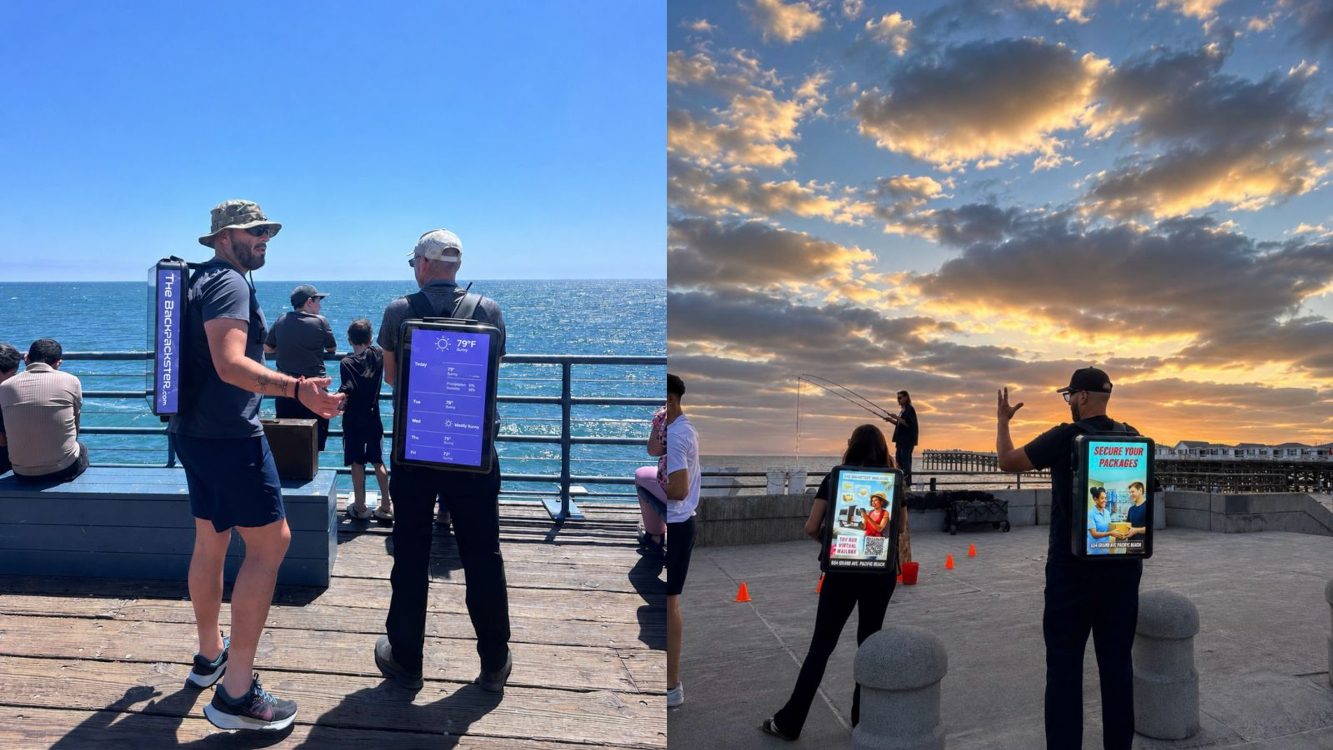
The Backpackster and Quividi have published results from a mobile out-of-home campaign run around SoFi Stadium during the Fifa World Cup 2026, combining wearable digital displays with camera-based audience analytics to measure attention rather than just exposure.
The Backpackster runs a network of wearable digital screens carried by gig workers on foot through high-footfall areas such as stadium precincts, campuses and city centers. Each unit is described as both a display and an edge AI sensing platform, with sensors capturing pedestrian movement, dwell time and density in addition to showing advertising. The pitch is reach into places fixed screens and vehicle-mounted DOOH cannot easily go, including informal advertising near events where a brand may not be an official sponsor.
For this activation, units were placed along pedestrian routes into and out of SoFi Stadium during World Cup matches. According to the companies, the campaign logged 17,111 advertising impressions, but Quividi's measurement layer went further, identifying 2,540 verified viewers and 1,148 engaged viewers, defined as people who looked at the screen for more than two seconds. The companies report an average attention time of 2.95 seconds and an average dwell time of 7.5 seconds, and say the data let them compare which creative executions held attention longest.
Why attention data matters here
Impressions have long been the default currency in out-of-home, but they only count opportunities to see, not confirmation that anyone actually looked. Quividi's system processes camera data on-device and generates anonymous demographic estimates, such as age and gender, without storing images or personal data, according to the companies. That on-device, privacy-first approach mirrors what audience measurement vendors have been building into fixed digital signage networks for years, now applied to a wearable, mobile format.
For operators and media owners, the relevant point is not the World Cup setting but the precedent: mobile DOOH, often treated as a novelty or guerrilla tactic rather than plannable media, is being fitted with the same kind of verified attention metrics that fixed networks use to justify CPMs. If that measurement holds up outside a single high-profile activation, it gives buyers a basis for comparing mobile screens against static digital out-of-home on more equal terms.
The release also includes anecdotal claims that fans stopped to watch the backpacks, pointed them out to others, and photographed them. That is not measurement, and the companies frame it as supporting color rather than data.
The announcement does not say what advertiser or brand ran the creative, how many Backpackster units were deployed, over what time period, or how the attention figures compare to Quividi's benchmarks on fixed digital signage.
The announcement in full
Reproduced from invidis for reference. Digital Signage Magazine did not write the text below.
Backpackster and Quividi put verified attention metrics to the test at Sofi Stadium. A World Cup activation in Los Angeles demonstrates how mobile DooH can move beyond impression counts to deliver attention-based measurement.
Mobile DooH remains one of the industry’s most disruptive formats. Operating in spaces beyond traditional media networks, it is often perceived as closer to guerrilla marketing than structured media planning, yet its ability to capture attention is undeniable. What has been missing, however, is reliable proof of audience engagement. A recent activation by San Diego-based The Backpackster and Quividi around Sofi Stadium in Los Angeles suggests that mobile DooH may finally be closing that measurement gap.
The two companies have released results from a Fifa World Cup 2026 campaign that combined wearable digital displays with audience analytics technology, aiming to measure not only how many people were exposed to advertising but how many actually looked at it and for how long.
The Backpackster describes itself as a human-powered media and urban intelligence platform. Its wearable digital displays are carried by Gig-workers walking predetermined routes or attending events, transforming high-footfall pedestrian environments into mobile advertising networks.
Each backpack functions as both a DooH screen and an edge AI-powered sensing platform. The concept is designed to reach locations where traditional roadside media, fixed screens, or vehicle-based advertising have limited access, including sidewalks, stadium precincts, university campuses, city centers, and large-scale events. Or more events where brands want to be present – sometimes piggybacking – without being an official sponsor.
The backback screen network also incorporates sensors for real-time pedestrian analytics, enabling brands and city planners to better understand movement patterns, audience density, dwell times, and engagement within physical environments.
Measuring attention at one of the world’s busiest sporting events
For the activation, Backpackster units were positioned around the primary pedestrian entry and exit routes serving SoFi Stadium during World Cup matches. The goal was to test how mobile screens perform in one of the most crowded and dynamic event environments in the world.
According to the companies, the campaign generated 17,111 advertising impressions. More notably, Quividi’s audience measurement technology identified 2,540 verified viewers and 1,148 engaged viewers, defined as people who viewed content for more than two seconds.
That distinction is important. While impression metrics remain the standard currency of out-of-home advertising, advertisers are increasingly looking for evidence of actual attention rather than simple exposure.
The campaign recorded an average attention time of 2.95 seconds and an average dwell time of 7.5 seconds. Using Quividi’s analytics, the partners were also able to assess which creative executions retained audience attention for the longest periods.
Rather than relying solely on estimated audience opportunities-to-see, the activation sought to capture real-world engagement in real time.
Quividi’s platform processes camera data directly on the device, generating anonymous audience insights such as age and gender profiles without storing images or personally identifiable information. The privacy-first approach reflects a broader industry trend towards audience measurement systems that balance advertiser demands for accountability with increasingly strict privacy requirements.
For advertisers, this additional layer of intelligence provides more than a simple viewer count. It helps determine whether campaigns are reaching the intended audience segments and which creative assets are delivering the strongest engagement.
Mobile DooH has long proven its ability to bring advertising directly into crowded environments. The missing piece has often been independent verification of audience attention.
By combining impression data with attention metrics, demographic insights, and engagement analysis, campaigns can be evaluated with a level of accountability typically associated with digital media channels.
The activation also produced anecdotal evidence of engagement. According to the companies, fans frequently stopped to watch the displays, pointed them out to companions, and photographed the backpack units while moving through the stadium precinct.
While such observations do not replace formal measurement, they underline the experiential nature of mobile media formats, particularly during live events where audiences are already highly engaged.
LED : Westfield Forum des Halles Upgrades Landmark Paris Display
Retail : Kiehl’s Expands Permanent Smart Mirror Rollout Across Five Markets
Politics and OoH : Hungary Introduces Heavy Out-of-Home Regulations
Technology : Rockbot Brings Vevo Music Videos to Commercial Screens
Navori : Frank Larsen Moves Into Strategic Advisory Role