BOE Steps Out of the Shadows at IFA 2026 With Signage, MicroLED Push
2026-09-10 · via invidis
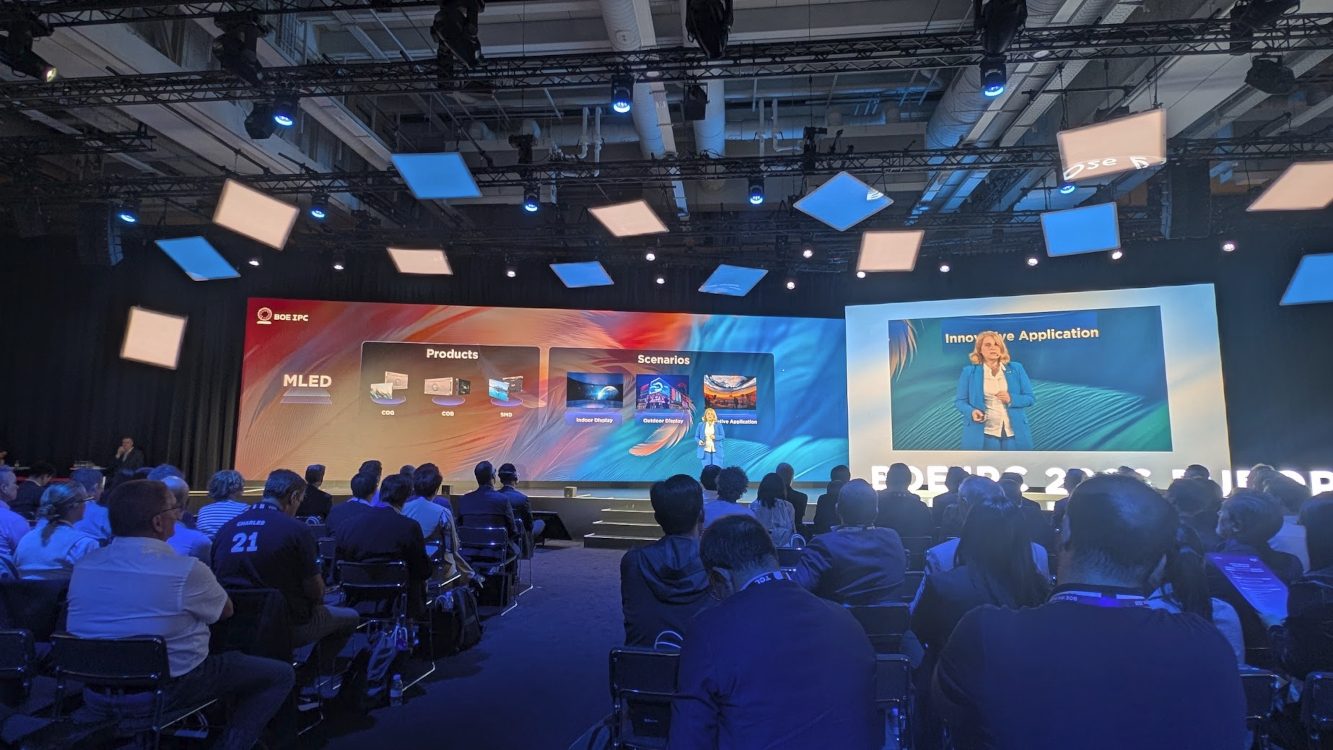
BOE, the Beijing-based company that according to its own figures supplies the panel inside one in every three large-format LCD displays sold worldwide, held its first conference and IPC customer event outside China at IFA 2026 in Berlin. The move signals a shift the company wants operators and integrators to notice: it no longer wants to be known only as a component supplier hidden behind other brands.
For most of the digital signage industry, BOE has been invisible by design, a panel maker whose glass ends up inside displays sold under other names. The company says it now generates more than half of its revenue outside China and is pushing further up the value chain, positioning itself as an ODM and technology partner rather than just a panel vendor.
At IFA, BOE showed more than 50 products aimed at international markets, spanning LCD, OLED, MicroLED (both Chip-on-Board and Chip-on-Glass) and ePaper. The direction mirrors what BOE showed at ISE earlier in the year, according to the article: more functionality, more form factors, and a push into vertical market solutions rather than raw panels alone.
Despite the visibility drive, buyers are still unlikely to see a BOE-branded display on the market anytime soon. The company's route to market remains indirect, through integrators, OEMs and hardware vendors who source BOE panels and technology and sell them under their own names. Ledcon, Barco and Vusion Group were named as customer examples. BOE is also a shareholder in Vusion, the electronic shelf label market leader, which the article notes now has more than 600 million active ESL installations worldwide.
Sustainability messaging was heavy throughout the event, with BOE tying low-carbon manufacturing and energy efficiency to its future positioning, a theme it clearly sees as commercially relevant given regulatory and energy-cost pressure on European retailers. Europe accounts for roughly half of all ePaper installations globally, mostly electronic shelf labels, though larger-format ePaper adoption is reportedly growing too.
On MicroLED, BOE presented a roadmap focused mainly on automotive head-up displays rather than signage. The company showed monochrome MicroLED at a 0.05mm pixel pitch, 400 ppi, and brightness up to 300,000 nits, alongside full-colour MicroLED at 0.2mm pitch reaching 60,000 nits. None of this is destined for signage deployments yet, but automotive display work often filters down into commercial display technology over time.
What the announcement does not address is pricing, availability timelines for any of the showcased products, or which specific signage products will carry BOE technology to market next.
The announcement in full
Reproduced from invidis for reference. Digital Signage Magazine did not write the text below.
Berlin | BOE powers millions of displays around the world, but has largely remained hidden behind other brands. That may be about to change, as the company used IFA 2026 to showcase its growing ambitions across digital signage, MicroLED, ePaper, AI and sustainable display solutions.
One in every three large-format LCD displays sold worldwide contains a panel manufactured by BOE. Yet outside the display industry, few people have ever heard of the Beijing-based company. The world’s largest LCD panel maker is now determined to change that.
At IFA 2026, BOE hosted the company’s first conference and IPC customer conference outside China, bringing industry representatives from around the world to Berlin. The event is meant to change the perception of BOE in the market: evolving from a component supplier into a global solutions provider.
For years, BOE has been best known as the quiet panel manufacturer of countless displays sold under other brands. A key but almost unknown supplier in the global digital signage market mainly supplying display factories in China. Today, the Chinese technology giant generates more than half of its revenue outside China and is increasingly looking beyond panels. LCD, OLED, MicroLED and ePaper technologies remain at the heart of the business, but the company’s ambitions now extend further up the value chain.
Alongside the conference stage, BOE showcased more than 50 innovations tailored for international markets. The exhibits ranged from LCD and OLED displays to advanced MicroLED solutions, including both Chip-on-Board (CoB) and Chip-on-Glass (CoG) architectures, as well as a growing portfolio of ePaper products developed with European customer requirements in mind.
The strategic shift was visible throughout the event. BOE no longer wants to be perceived solely as a panel manufacturer. Instead, the company is positioning itself as an ODM and technology partner capable of delivering complete solutions.
Visitors familiar with BOE’s presence at ISE earlier this year will have noticed the same direction of travel. The company is expanding its portfolio with additional functionalities, new display form factors and vertical market solutions designed to integrate more deeply into customer environments.
For European audiences, another message was impossible to miss: sustainability. Across presentations, demonstrations and discussions, keywords such as low carbon, energy efficiency and green transformation were omnipresent. While “green signage” has become a recurring theme across Europe, BOE is making it a core pillar of its future positioning.
Whether driven by regulation, energy costs or ESG objectives, demand for more efficient display technologies continues to gain momentum throughout the European market. BOE clearly sees this as both a business opportunity and a competitive advantage.
Ironically, despite its growing visibility, digital signage customers are unlikely to purchase a BOE-branded display anytime soon.
The company’s preferred route to market remains largely indirect. Integrators, OEMs and hardware vendors can source BOE products and technologies before bringing them to market under their own brands. In many cases, BOE’s technology will remain invisible to end customers, much as its LCD panels have for years.
Three prominent customer examples presented at the conference were Ledcon, Barco and Vusion Group. BOE’s connection to Vusion is particularly noteworthy. The company is also a shareholder in the electronic shelf label (ESL) market leader, whose installations now exceed 600 million active ESLs worldwide.
An interesting statistic shared during the event highlighted Europe’s importance in the ePaper ecosystem: around half of all ePaper installations worldwide are located in Europe. While electronic shelf labels account for the vast majority of deployments, adoption of larger-format ePaper solutions is also accelerating. Retailers across Europe increasingly view ultra-low-power displays as a practical tool for reducing energy consumption while improving operational efficiency.
No technology conference in 2026 would be complete without artificial intelligence, and BOE ensured AI featured prominently throughout the event.
The company is applying AI across its entire value chain. Manufacturing processes are becoming increasingly automated and predictive. Product development incorporates AI-enhanced capabilities, while operational management benefits from data-driven optimization and monitoring.
Rather than treating AI as a standalone feature, BOE appears to view it as an enabling technology that supports efficiency, quality and productivity across multiple business functions.
Perhaps the most interesting insights came from BOE’s MicroLED roadmap presented by Christina Balk.
For years, MicroLED technology has faced criticism over brightness limitations, manufacturing complexity and cost. BOE’s latest developments suggest meaningful progress is being made, particularly in automotive applications.
The company demonstrated monochrome MicroLED solutions with pixel pitches of just 0.05 mm, achieving 400 ppi and brightness levels of up to 300,000 nits for head-up display applications. Full-colour MicroLED solutions with a 0.2 mm pitch can already reach 60,000 nits.
These products are not yet destined for digital signage deployments, but they provide an indication of where the technology is heading. Automotive applications often serve as an innovation incubator for future commercial display technologies, and MicroLED is no exception.