BrightSign Launches Control Plus, Cloud Tier for Managing Player Fleets
2026-08-02 · via BrightSign
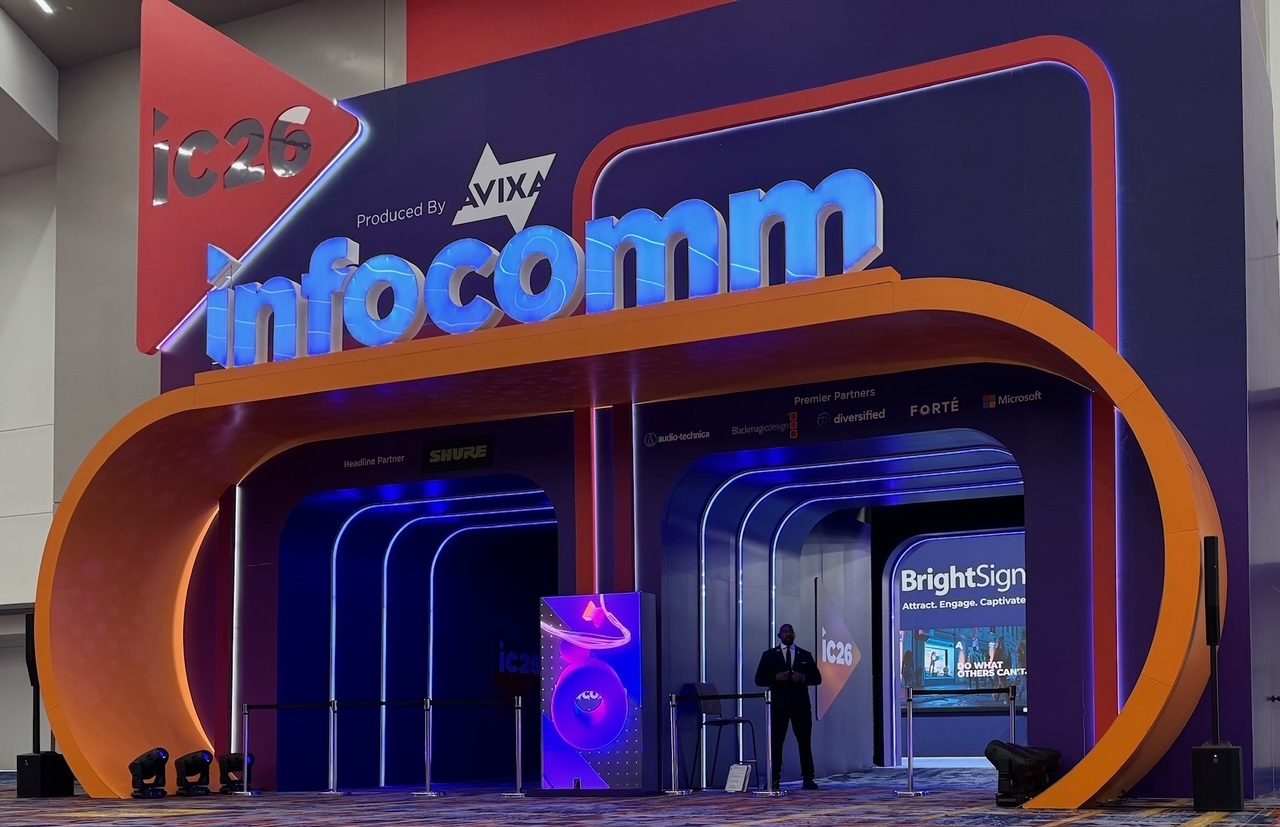
BrightSign used a post-InfoComm 2026 recap to confirm the launch of BrightSign Control Plus, a new premium, cloud-based tier of its BrightSign Control device management platform. The company also said it added new partners to its BrightSign Built-In (BSBI) ecosystem, the program that puts BrightSign's operating system directly inside display hardware rather than relying on an external media player.
For operators running distributed signage networks, the headline here is fleet management. According to BrightSign, Control Plus lets users scale, configure, monitor, update and schedule actions across fleets of players regardless of location, with the ability to check player health, diagnose issues and push updates in bulk. That puts it in direct competition with the remote monitoring and device management features already offered by rivals such as Scala, Four Winds Interactive, and other CMS platforms that have spent the last few years building out cloud dashboards for exactly this kind of centralized control.
The announcement does not say what Control Plus costs, how it differs feature-by-feature from the standard tier of BrightSign Control, or when it becomes generally available. Those are the questions an operator evaluating the upgrade would need answered before budgeting for it.
Built-In Partnerships Expand
On the hardware side, BrightSign said it showcased new additions to its BSBI partner ecosystem at InfoComm, expanding the list of display manufacturers that embed BrightSign's OS natively. The company frames this as useful for retailers with limited physical space, such as shelf-integrated displays where there is no room for an external player box but performance still needs to hold up.
The blog post does not name which manufacturers joined the BSBI program or how many partners are now in it, so the scale of the expansion is unclear from this release alone.
Context From the Wider Post
The bulk of BrightSign's post-InfoComm write-up is a trend forecast rather than news: predictions that end users will keep prioritizing measurable business outcomes over uptime metrics, that AI will keep moving into monitoring and audience detection, and that software will increasingly drive hardware purchasing decisions. BrightSign points to its players' built-in neural processing units as evidence it is positioning hardware for on-device AI workloads, though no new AI product is announced here.
For signage operators, the concrete takeaways are the Control Plus launch and the BSBI expansion. Everything else in the post is BrightSign's read on where the market is heading, worth noting as one vendor's perspective rather than independently verified industry data.
The announcement in full
Reproduced from BrightSign for reference. Digital Signage Magazine did not write the text below.
From AI to Software to Experiences: Five Trends Driving the Industry Forward
It’s hard to believe that we’re more than halfway through 2026. Digital signage is already making strides, representing a stable growth industry that’s continuing to evolve, adapt, and shift perceptions among end users. As it currently stands, experts predict the digital signage market to grow from $33.6 billion in 2026 to $58.4 billion by 2033.
Now that we’re a few weeks removed from InfoComm 2026, there’s no better time to take a pulse check on digital signage trends and make predictions on where the industry is heading.
End-Users Prioritize the Experience They Want to Create
Integrators and end-users are focusing on the “experience” and how tech can help them achieve it. This was evident across the InfoComm show floor with less talk about the “nuts and bolts” and more focus on digital experiences, connected spaces, immersive environments, and experiential retail.
At the BrightSign booth, we highlighted BrightSign applications in specific industry environments including retail , QSR , transportation , and healthcare , which drove discussion with intent. We also saw more organizations showcase solutions in real-world environments, such as InfoComm’s Retail Experience, a hands-on demonstration of the solutions shaping modern commerce. The message is clear: buyers want digital signage solutions that correlate to specific business outcomes. Success will depend on delivering measurable, experience-driven results.
Over the next few years, we’ll see this trend give rise to new industry-specific solutions as more organizations seek out technology tailored specifically to market applications. This will include industry-specific templates, integrations, workflows, and analytics instead of one-size-fits-all systems.
Software Has Become A Primary Driver of Digital Signage Hardware Selection
As activations grow more complex and signage networks become increasingly distributed, end users are prioritizing solutions that offer scalability and ease of use. The result is the rise of remote management capabilities and other managed services that make innovative hardware more reliable and secure in the real world. We witnessed this trend in full force at InfoComm, where software was a dominant part of digital signage conversations.
Our response to this need was the launch of BrightSign Control Plus , a new premium tier of BrightSign Control, that is cloud-based and lets users scale, configure, monitor, update, and schedule actions for fleets of players, no matter where they are. This added layer of visibility and control instills confidence across fleets, giving operators the ability to monitor player health, diagnose issues, and make updates simultaneously for full enterprise-grade control.
Looking ahead, integrators and end-users will continue to pay closer attention to software and service capabilities that improve ROI, instead of focusing solely on speeds and feeds. Digital signage deployments will benefit from accelerated time-to-market and the ability to remotely reboot and reconfigure devices in bulk.
Hardware Flexibility and Reliable OS Operation Drive Digital Signage Deployments
End users recognize the key role digital signage plays in driving business revenue and engagement. At InfoComm, conversations centered on solutions that offer flexibility and choice. This ensures displays can easily integrate into existing environments and deliver consistent enterprise-grade performance without limiting creativity and innovation.
The industry’s response to this trend was evident across the show floor in new partnerships between display manufacturers and OS providers. At the BrightSign booth, we showcased new additions to the BrightSign Built-In (BSBI) partner ecosystem to expand options for customers and give them unrivaled display choices that take advantage of a purpose-built digital signage operating system and growing CMS partner network.
How does this help end users? A retailer, for instance, may want to implement displays but has a smaller physical footprint and needs a compact solution that can integrate into existing shelves. That’s where BSBI comes in. While there’s limited room for an external player, retailers can’t afford to compromise on performance, making a flexible, built-in solution ideal.
Looking ahead, we’ll see organizations across industries prioritize flexibility and reliable OS operation as they create unique, custom audience experiences. The opportunities are endless.
Winning the attention of audiences is still the name of the game. And, just as important is being able to monitor and measure that impact. It’s not a problem easily solved by presenting more content. Rather, integrators and end users need solutions that let them deliver customized signage quickly, consistently, and at scale. Thankfully, AI has moved from fluff to solving for these very important elements of the digital signage equation.
This was evident throughout InfoComm in the variety of new AI-powered signage applications on display. AI is now supporting signage monitoring and management, detecting content anomalies such as incorrect aspect ratios and blank screens, and accelerating diagnoses and fixes. AI was also seen supporting audience detection and content performance, giving digital signage the ability to dynamically adjust content displays in real time.
Still, end-users will seek to prioritize solutions that can maintain strong performance despite these power-hungry applications. At BrightSign, for instance, we design our players with a built-in neural processing unit (NPU) that can run powerful AI applications directly on the player.
In the years ahead, we’ll see AI capabilities continue to expand, making high-performing players and displays a must-have for end-users who need dynamic content applications.
Digital signage is a key ROI driver. Success metrics have shifted from “uptime” to business outcomes. Organizations are asking themselves if the display increased sales, if the wayfinding minimized service requests, and if the content increased engagement.
Meanwhile, data-rich environments like retail and QSR are turning to digital signage as the execution layer of their enterprise systems. They are increasingly looking for digital signage software applications that help them interpret the multitudes of data they collect.
We saw this across the show floor with more end-users asking about CMS integrations to better manage their data in one place for maximum ROI. It’s a trend that will continue in the coming years as organizations seek to act on better and more reliable information.
The need for flexible, reliable solutions that deliver tailored, dynamic, and engaging experiences will drive industry expansion.
The remainder of 2026 will be exciting to watch as the digital signage industry firmly moves from ideation to true innovation, with tangible business outcomes at the core.
If you’re considering these trends when planning your own digital signage deployment, BrightSign can help. Contact us to discuss your goals with our expert team.