Glasses Retailer Hires 25 LED Billboard Trucks to Protest Google Ads Bill
2026-08-02 · via AV Magazine
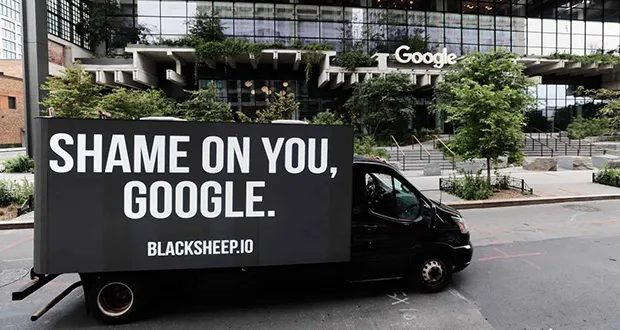
Online glasses retailer Blacksheep.io has hired 25 LED billboard trucks to circle Google's New York City headquarters, displaying the message "Shame on you, Google" as part of a dispute over a $77,000 advertising bill. The campaign is a reminder that mobile LED fleets are increasingly the tool of choice for companies that want a fast, visible, and hard-to-ignore way to make a public complaint, not just to sell products.
According to Blacksheep, the bill arose after an NBC Today Show segment featured a test in which its $8 factory-direct glasses reportedly outperformed $350 prescription glasses on "optical precision." The segment drove a surge of viewers to search for the brand on Google. Blacksheep says a platform glitch then redirected that organic search traffic to a third-party site rather than to its own store, which the company says had previously held the top organic ranking for its own name.
Blacksheep claims this redirect forced users to click through its paid search listing instead of the organic one to reach its store, generating a $77,000 ad bill over a 30-hour window. The company says Google's automated systems refused to issue ad credits even after Blacksheep presented Google Search Console data showing no technical SEO or indexing errors on its own domain.
Why it matters for screen operators
For readers who run digital signage and DOOH fleets for a living, the story is less about the Google billing dispute itself and more about the tactic. A brand with a grievance against one of the largest platforms on earth chose mobile LED trucks, not a press release or a social media thread, as its primary communication channel. That is a signal of how normalised and accessible truck-mounted LED has become as a fast-turnaround, high-visibility medium, available to a single online retailer rather than only to large ad agencies or automotive-scale brands.
The announcement does not say who supplied or operated the 25 trucks, what specifications the screens carried, how long the protest ran, or what it cost Blacksheep to mount. It also does not say whether Google has responded directly to the billboard campaign itself, as opposed to the underlying billing dispute.
What is notable by its absence is any detail on measurement or audience data for the campaign, standard fare for most DOOH activations covered in this trade press. That suggests the trucks were deployed primarily for earned media and social amplification value near Google's headquarters, rather than as a data-driven out-of-home buy. For an industry that spends much of its energy proving DOOH's audience measurement credentials to advertisers, a stunt like this is a useful counterpoint: sometimes the value of a truck-mounted screen is simply that it cannot be scrolled past, deleted, or ignored by the company it is parked outside.
The announcement in full
Reproduced from AV Magazine for reference. Digital Signage Magazine did not write the text below.
By AV Magazine in Digital Signage and DOOH , US&Canada July 30, 2026 0
A factory-direct glasses retailer used the guerilla marketing campaign to highlight a $77,000 Google Ads bill it ran up in 30 hours due to ‘an organic search glitch’.
A disgruntled Google Ads customer has hired 25 LED billboard trucks to protest against a disputed bill for nearly $80,0000.
Blacksheep.io, an online glasses marketplace, hired the trucks to display the message “Shame on you, Google” outside the search giant’s headquarters in New York City.
Blacksheep is accusing Google of a “predatory platform failure” that occurred after the platform was featured on the Today Show by an NBC News reporter.
The TV segment reported a test in which Blacksheep’s $8 factory-direct glasses outperformed high-end prescription glasses costing $350 in “optical precision”, sending a flood of viewers to search for Blacksheep on Google.
Blacksheep claims a Google platform glitch redirected organic search traffic to a third-party brand, rather than to Blacksheep’s official store, which previously held the #1 organic search ranking for its own name.
Blacksheep claims this redirect to a third-party site forced users to click on Blacksheep’s paid search ad listing to access its store, resulting in a bill of $77,000 over a 30-hour window.
The search giant then issued automated refusals to issue ad credits, when presented with evidence that its own Google Search console showed zero technical SEO or indexing errors on Blacksheep’s own domain,