Ledman Says COB LED Technology Cuts Moiré Effect On Camera
2026-08-11 · via AV Magazine
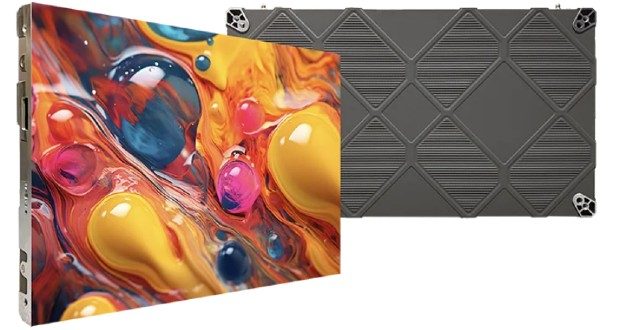
LED display maker Ledman has laid out why chip-on-board (COB) packaging produces cleaner on-camera results than traditional surface-mounted diode (SMD) panels, addressing a problem familiar to anyone running LED walls in broadcast studios, boardrooms or virtual production sets: screen moiré.
Moiré shows up as wavy lines, shimmer or false colour in recorded footage of an LED screen, even when the display looks perfectly sharp to the naked eye. According to Ledman, it happens when the physical pixel grid of the display and the sampling grid of a camera sensor overlap and interact, an aliasing effect that gets worse as cameras zoom, pan or tilt.
Ledman says SMD panels are more prone to this because individual diodes sit on the board surface with visible black borders between them, creating a strong, high-contrast spatial pattern that cameras struggle to sample smoothly. COB panels, by contrast, mount bare LED chips directly onto the circuit board and seal them under a continuous protective surface layer. Ledman says this produces a more uniform light-emitting surface with less-defined pixel boundaries, which reduces the chance of moiré.
The company lists several structural advantages it attributes to COB: finer pixel pitch below 1mm, higher pixel density per square metre, fewer visible gaps between pixels because resin fills the space, and softer, more continuous light output rather than sharp point sources.
Not a silver bullet
Ledman is careful to note that COB alone does not eliminate moiré. The company says the final result still depends on camera resolution, lens choice, shooting distance, viewing angle and the content on screen. It recommends matching pixel pitch to the closest expected camera distance, using a high refresh rate to avoid flicker and scan lines, maintaining colour uniformity across viewing angles, and planning camera placement during studio design rather than after installation. Ledman also suggests testing candidate panels with the actual cameras and lenses that will be used on site before committing to a display.
For signage and AV integrators, the announcement is a reminder that pixel structure and packaging method matter beyond simple brightness or pitch specs, particularly for any installation likely to be filmed, whether that is a broadcast backdrop, a corporate video wall, or a retail display used in promotional content. The release does not name specific Ledman product lines, give pricing, or provide independent test data comparing COB and SMD moiré performance, so buyers weighing the two technologies will need to see comparative footage or run their own camera tests, which is exactly what Ledman itself recommends.
The announcement in full
Reproduced from AV Magazine for reference. Digital Signage Magazine did not write the text below.
By AV Magazine in Displays August 10, 2026 0
Ultra-fine pixel pitches, reduced pixel boundaries and better light uniformity can create a smoother light-emitting surface for cleaner on-camera images, according to manufacturer Ledman.
Although capturing a flawless video backdrop in modern broadcasting, corporate boardrooms and virtual production studios is crucial, many production teams still face their recordings being ruined by wavy interference lines across the background of their LED displays.
Known as the screen moiré effect, this severely degrades picture quality on camera even when the display looks perfect to human eyes.
The optical interference pattern occurs when two repetitive patterns interact. In LED displays, one pattern comes from the pixel array, while the other comes from the camera sensor.
In video production, one repetitive pattern is the physical pixel structure of the display, while the second grid is the pixel layout of the camera sensor. This optical phenomenon can produce wavy lines, ripples, shimmering patterns or false colour artefacts in recorded footage.
This artefact commonly appears when a camera captures the fine pixel structure of an LED display and the sensor sampling frequency interacts with the display’s pixel pattern.
Distortion through camera lens Although the video display may look sharp and uniform to the human eye, it appears severely distorted through the camera lens. The pattern occurs when the spacing of the LED pixels aligns unfavourably with the camera sensor, producing an aliasing effect.
The moiré effect in video capture occurs at the sensor level. Digital camera sensors capture images through an array of pixels. When a camera points at an LED display, the sensor grid overlaps directly with the physical matrix of the screen.
Traditional surface-mounted diode (SMD) packaging relies on discrete light points. In an SMD panel, individual diodes are mounted onto the board surface with noticeable black borders between each pixel. These distinct light sources create a strong spatial frequency pattern.
When professional cinema or broadcast cameras zoom, pan or tilt, these discrete points of light accentuate spatial frequency interference. The camera sensor fails to sample the high-contrast light grid smoothly, triggering a severe screen moiré effect in recorded video.
Chip-on-board (COB) LED displays can help reduce the screen moiré effect, according to display manufacturer Ledman.
COB technology changes how diodes interact with camera optics, as in a COB display, bare LED chips are mounted directly on to the circuit board substrate and sealed under an integrated protective surface layer.
More uniform light-emitting surface This surface encapsulation creates a more uniform light-emitting surface, making individual pixel boundaries less noticeable to cameras. By smoothing out physical pixel boundaries, COB technology provides several structural advantages that help reduce the likelihood and visibility of moiré artefacts, compared with conventional SMD display:
Finer pixel pitch options – COB manufacturing easily achieves micro-pitch spacing of significantly below 1mm.
Higher pixel density – increasing pixel density per square meter reduces spatial frequency mismatches with camera sensors.
Reduced visible gaps – integrated surface resin fills the space between pixels, eliminating high-contrast black borders.
Smoother light distribution – diodes emit light through a continuous protective layer, creating soft surface luminescence instead of harsh point sources.
Superior image continuity – even at close shooting distances, the screen maintains unified imagery without revealing pixel grids.
While COB technology significantly reduces the likelihood of moiré, the final result also depends on factors such as camera resolution, lens selection, shooting distance, viewing angle and display content.
System design plays a role As well as the display technology, the overall system design has to be taken into account, in order to achieve the best on-camera performance. The following factors help maximise the moiré reduction benefits of COB LED displays:
Pixel pitch – choosing a fine pixel pitch that matches the closest camera shooting distance keeps pixel structures invisible.
High refresh rate – eliminates scan lines and image flickering during video capture.
Colour uniformity – strong brightness and colour consistency across all viewing angles keep images stable on camera.
Studio viewing distance planning – calculate camera placement early in the design phase to match screen resolution with lens focal lengths.
On-site camera testing – test candidate display panels using your actual studio cameras, lenses and planned shooting angles.
For more information on Ledman, visit: https://www.ledman.com/