McDonald's Builds Ad Business on Drive-Thru Screens, Targets $1B Media Revenue
2026-09-27 · via invidis
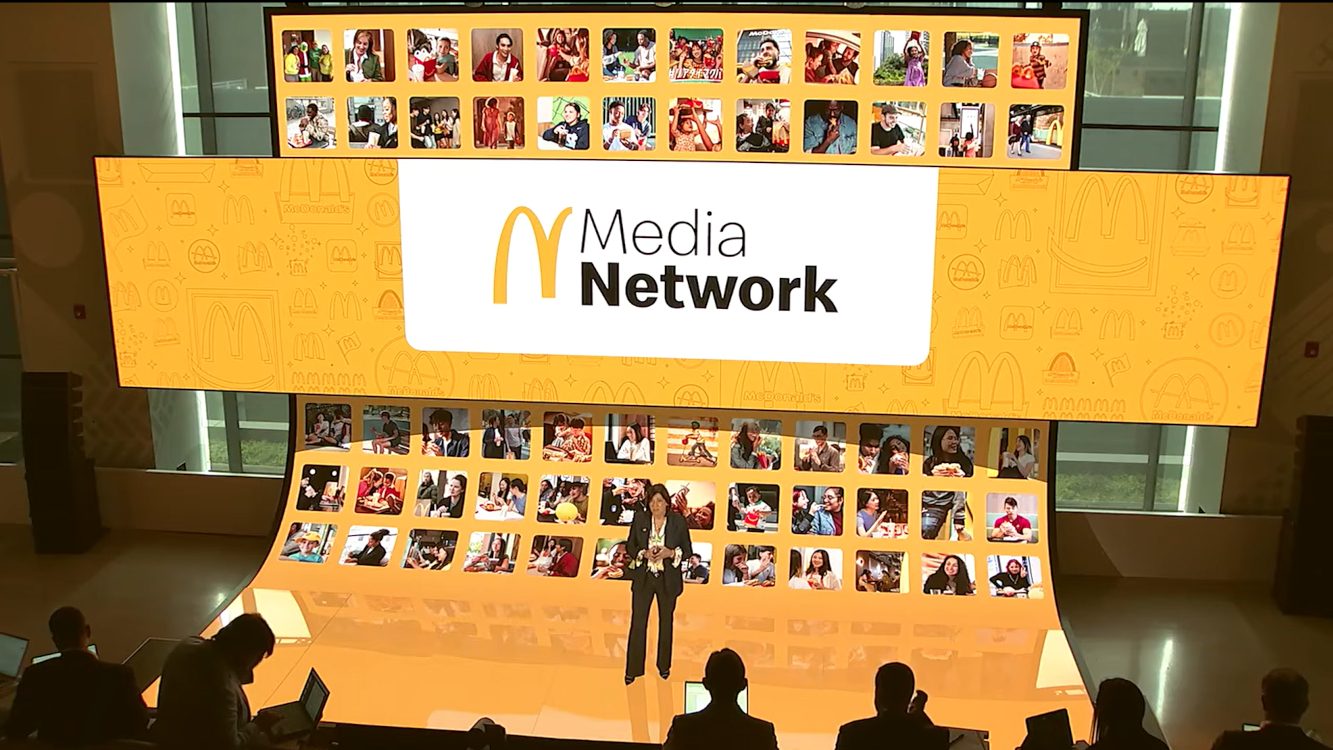
McDonald's is testing advertising on drive-thru ordering screens at around 450 US restaurants, the first visible step in a commerce media strategy the company says it wants to grow into a business generating more than USD 1 billion a year, according to reporting on the chain's recent Investor Day.
For an industry that has spent years pitching digital menu boards as a way to boost basket size, this is a bigger claim: McDonald's wants its screens to become an ad platform in their own right, not just a sales tool.
The company says it can draw on data from roughly 220 million loyalty members and about 70 million daily visits worldwide to build that platform. That is a scale of first-party data and foot traffic that few retail media networks can match, and it puts McDonald's in direct competition with retailers and QSR peers already selling media inventory against their own screens and apps.
Where the ads could go next
The current trial is limited to drive-thru ordering screens, but the report notes that digital menu boards, self-order kiosks and the McDonald's mobile app are logical next channels. McDonald's has not said when or whether it will expand beyond the pilot, so operators should treat that expansion as expected rather than confirmed.
The advertising push sits alongside a wider round of technology investment. McDonald's has built what it calls a Customer Engagement Engine and a Menu Pricing Engine, tools it says optimize offers and pricing using restaurant data. It is also rolling out ArchIQ, an AI-powered restaurant operating system built with Google that brings edge AI processing into US restaurants, and Archy, a voice ordering system for drive-thru that McDonald's says hits more than 90% order accuracy and cuts an estimated 50 labor hours per restaurant per week.
McDonald's is also moving toward a single point-of-sale platform across all its restaurants globally, replacing years of regional variation, and is introducing new restaurant designs and digital signage formats under its McDonald's Next initiative. As with most large chain rollouts, remodeling cycles run on a market-by-market basis and can stretch past a decade, so any new screen formats will arrive unevenly across regions.
What the reporting does not spell out is which vendors are supplying the screens, media players or ad-serving software behind the drive-thru trial, or how revenue will be split with any media partners. For digital signage suppliers and CMS vendors serving QSR chains, the direction is still clear: McDonald's is treating its screen network as monetizable infrastructure, not just a menu display, and competitors in the sector are likely to face pressure to offer similar ad-sales capability.
The announcement in full
Reproduced from invidis for reference. Digital Signage Magazine did not write the text below.
McDonald’s is preparing for its next phase of growth with a strategy that combines AI-powered operations, digital customer engagement, and a new commerce media business. While menu innovation remains important, the real transformation is happening behind the counter and across the chain’s growing network of digital touchpoints.
With more than 46,000 restaurants worldwide, McDonald’s has one of the largest physical retail networks on the planet. The QSR company now aims to monetize that footprint in new ways, turning digital screens, loyalty data, and customer interactions into a powerful commerce media platform.
Building a Billion-Dollar Media Business
Commerce media has become one of the hottest growth areas in retail, and McDonald’s wants a significant share of the market. The QSR giant is targeting a media business capable of generating more than USD 1 billion in annual revenue over time.
The foundation is already in place. McDonald’s can leverage data from nearly 220 million loyalty members and approximately 70 million daily restaurant visits worldwide. Together, these assets create one of the largest consumer engagement platforms in the foodservice industry.
Initial commerce media trials are underway in around 450 U.S. restaurants. Advertising currently appears on drive-thru ordering screens, but expansion into additional digital channels is widely expected. Digital menu boards, self-order kiosks, and the McDonald’s mobile app are all logical extensions of the media network.
Digital Becomes the Primary Sales Channel
The future McDonald’s restaurant is increasingly digital. In China, the transformation is already well advanced, with approximately 98% of transactions taking place through digital channels. Other markets may not be at the same level yet, but they are moving rapidly in the same direction.
Digital ordering, loyalty programs, mobile payments, kiosks, and drive-thru technologies are becoming core components of the customer journey. As more transactions move to digital platforms, McDonald’s gains additional opportunities to personalize offers, optimize pricing, and generate advertising revenue.
Beyond customer-facing technology, McDonald’s is investing heavily in AI-driven operations.
The company has developed a Customer Engagement Engine and a Menu Pricing Engine aimed at improving restaurant performance and increasing revenue. These systems use data and automation to optimize customer interactions and menu management in real time.
The latest step is ArchIQ, an AI-powered restaurant operating system designed to bring intelligence closer to the restaurant floor. Working with Google, McDonald’s is deploying edge AI capabilities across its U.S. restaurant network, enabling faster data processing and more responsive operations.
At the same time, McDonald’s has achieved a milestone that would have seemed almost impossible a decade ago: after years of regional technology variations, the company is moving toward a unified point-of-sale platform across all restaurants worldwide.
The Chicago-based QSR giant showcased its two-hour Investor Day presentation on a striking LED installation at its headquarters. The stage featured a concave LED video wall with a wide horizontal main display, creating an immersive visual environment for the executive leadership team’s presentations.
The unconventional screen geometry offered a highly engaging viewing experience, demonstrating how creative LED design can transform corporate events into impactful brand experiences. The result was a distinctive and visually impressive stage concept that stood out from the standard presentation format.
One of the most visible innovations is Archy, McDonald’s AI-powered voice ordering system for drive-thru operations.
Currently available in English and Spanish in the U.S., the technology reportedly achieves more than 90% order accuracy. The automation not only improves consistency but also reduces labor requirements by an estimated 50 employee hours per restaurant per week.
New Restaurant Concepts, Familiar Rollout Pace
The transformation extends to restaurant design as well. Under the McDonald’s Next initiative, the company is introducing updated architecture concepts and new digital signage experiences that better support omnichannel customer journeys.
However, industry observers should not expect an immediate global rollout. Like most major restaurant chains, McDonald’s follows a market-by-market deployment strategy, with restaurant remodeling cycles often stretching across ten years or more.
Digital Signage Becomes Strategic Infrastructure
For the digital signage industry, McDonald’s evolution offers an important lesson. Digital screens are no longer simply menu displays or promotional tools. They are becoming strategic infrastructure that supports customer engagement, AI-driven operations, dynamic pricing, loyalty programs, and increasingly, media monetization.
As McDonald’s transforms its restaurants into connected digital platforms, digital signage moves from a supporting role to the center of the business model. The result is a restaurant network where every screen has the potential to drive sales, improve efficiency, and generate advertising revenue simultaneously.