Soltec Fits Barcelona Metro With 1,314 LCD-TFT Passenger Displays
2026-10-16 · via AV Magazine
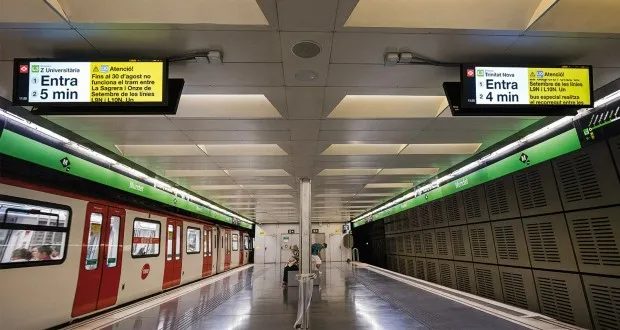
Display manufacturer Soltec has installed 1,314 passenger information monitors across the Barcelona Metro network, replacing LED screens with LCD-TFT displays at 128 stations on six metro lines. For an operator running screens in a high-traffic transit environment, the swap signals a broader shift away from LED toward LCD panels for passenger information, largely because of the image quality and content flexibility LCD offers over LED.
According to Soltec, the new monitors are spread across platforms, lobbies and connecting corridors, and move beyond simple train wait times to support a wider range of customer information, including corporate and commercial content. That matters for transit authorities looking to generate ad revenue or push service messaging without installing separate screens for each purpose.
Most of the displays are just under 50 inches, with some 55-inch ultra-wide monitors placed in station concourses. Soltec says platform screens are double-sided, while corridors and concourses use single-sided, wall-mounted units with a resolution of 1,920 by 540 pixels. That ultra-wide aspect ratio is standard for transit signage, built to fit narrow mounting zones above platforms and along corridors rather than conventional 16:9 shapes.
Retrofit over rip-and-replace
One detail worth noting for anyone managing a large-scale hardware refresh: Soltec says one of the main technical challenges was adapting the new displays to existing infrastructure, reusing the mounting points already in place from the LED installation. That is a practical consideration for any operator weighing a similar upgrade across a large estate, since avoiding new mounting work can significantly cut installation cost and downtime across more than a hundred sites.
The announcement, relayed through a blog post on Soltec's website, does not say what media player or content management software is driving the displays, nor does it specify a timeline for the rollout or give a total project cost. It also does not detail how commercial content will be sold or managed, which would be the natural next question for anyone watching this as a potential revenue model for transit signage elsewhere.
The project covers Transports Metropolitans de Barcelona, the authority running the city's metro, and represents one of the larger single rollouts of passenger information displays reported in Europe this year by display count. Whether other transit operators follow with similar LED-to-LCD swaps will likely depend on how this installation performs once commercial content is actually running on the new screens, something the announcement does not address.
The announcement in full
Reproduced from AV Magazine for reference. Digital Signage Magazine did not write the text below.
By AV Magazine in Digital Signage and DOOH , Europe , Transport October 15, 2026 0
The project has seen single- and double-sided Soltec monitors replace LED screens across 128 stations, offering a wider range of customer information in a more legible format.
Display manufacturer Soltec has supplied 1,314 passenger information monitors for the Barcelona Metro network.
The project for Transports Metropolitans de Barcelona has seen LED screens replaced by LCD-TFT displays at 128 stations across six metro lines.
The new monitors – which are distributed across platforms, lobbies and connecting corridors – offer a sharper image, enhanced graphics capabilities and the possibility of using color.
The displays can show a wider range of information than simply train wait times, and can incorporate corporate and commercial content.
Most of the displays are just under 50″, although some 55″ ultra-wide monitors have been installed in station concourses.
The station platforms have been equipped with double-sided screens, while the corridors and concourses boast single-sided, wall-mounted monitors with a resolution of 1,920 by 540 pixels.
One of the project’s main technical challenges was adapting the new technology to the existing infrastructure, making use of the mounting points already installed, according to a blog post on the Soltec website .