Why Context, Not AI Content, May Be Digital Signage's Next Leap
2026-09-30 · via invidis
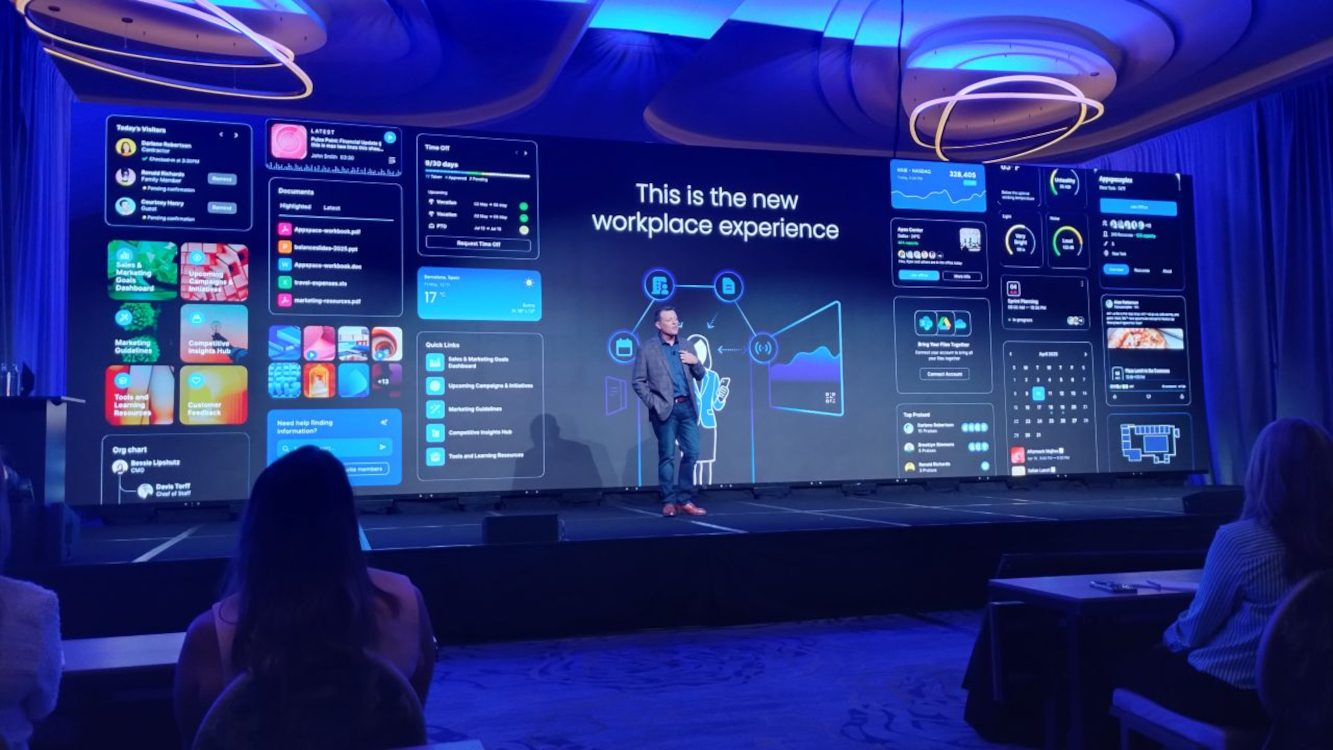
Digital signage has spent most of its history running on playlists and rules set in advance: schedule content by time, location, or a trigger like weather or a live data feed. A commentary from invidis argues the industry's next real advance will not come from AI-generated content but from screens that understand and react to what is actually happening around them in real time, using Appspace's newly announced Situational Signage as the example worth watching.
The idea of context-aware signage is not new. Operators and vendors have talked about responsive screens for years. What has held it back, according to the piece, is not lack of ambition but fragmented data sources, disconnected systems, and the difficulty of wiring real-world signals into content workflows that were built around fixed playlists.
Why workplaces get there first
The commentary singles out office environments as the likely proving ground, not retail or transit. Workplaces are unusually data-rich and already digitized: occupancy sensors, room booking systems, visitor management, internal comms, and workplace services all generate structured data that a platform can plug into. That gives workplace experience vendors like Appspace, which already sits inside many of these systems, a head start that a retail or transport network would not have without significant new integration work.
For operators, the framing matters more than the product name. The piece positions digital signage's evolution in three stages: playlists first, data-driven content second, and context-aware signage as a possible third generation. If that framing holds, screens stop just displaying information on a schedule and start responding to conditions as they change, whether that is a meeting room filling up, a visitor checking in, or a shift in building occupancy.
What the commentary does not do is describe what Appspace's Situational Signage actually does in technical terms, what data sources it connects to out of the box, or how it differs operationally from existing rules-based triggers that many CMS platforms already support. It also does not address cost, deployment complexity, or how this would translate to venues without the workplace's built-in data infrastructure, such as retail floors or public spaces where sensor and data integration is far messier.
The author's own caveat is the honest one: the industry has to prove that added relevance is worth the added complexity. Context-aware signage sounds better than rules-based playlists on paper. Whether it holds up once IT teams have to integrate and maintain the data pipelines behind it is a separate question, and one this piece leaves open.
The announcement in full
Reproduced from invidis for reference. Digital Signage Magazine did not write the text below.
The biggest untapped opportunity in digital signage is not AI-generated content, but contextual relevance. Appspace's Situational Signage offers a glimpse of a future where screens respond dynamically to their environment rather than following predefined rules.
For decades, digital signage has been built around playlists. Content was scheduled by time, location, and a predefined set of business rules. As the industry evolved, data integrations brought greater sophistication, allowing screens to react to external triggers such as weather conditions, operational metrics, or live information feeds.
Digital signage has always promised to deliver the right message at the right place and time. Yet most deployments still rely on assumptions made in advance. Content strategies are planned for scenarios that may or may not occur. The real opportunity lies in enabling screens to understand what is happening in their immediate surroundings and respond dynamically in real time.
The concept is not new. The industry has discussed context-aware and responsive signage for years, but practical implementation has been limited by fragmented data sources, disconnected systems, and the complexity of integrating real-world signals into content workflows. Workplace environments offer a unique exception. Unlike retail, transportation, or public venues, offices are highly structured and data-rich environments. Occupancy levels, room bookings, visitor activity, employee communications, and workplace services are already digitized and readily available.
This gives workplace experience platforms such as Appspace a distinct advantage. By connecting these data points, situational signage becomes more than a vision. It becomes a realistic application of contextual computing in the physical workplace.
If playlists represented the first generation of digital signage and data-driven content the second, context-aware signage may well define the third. The challenge will be proving that greater relevance justifies the additional complexity. But if successful, situational signage could finally move screens from simply displaying information to actively responding to the environment around them.
Context : Appspace Unveils Situational Signage
invidis Comment : The Untapped Potential of Context
Programmatic DooH : Private Marketplaces Account For 76% Of Global Spend
LedX : The Long Road to India’s LED Display Future
Focus on India : Digital Signage Market Enters a New Growth Phase