Why Shenzhen Still Builds Most of the World's Digital Signage Hardware
2026-11-17 · via invidis
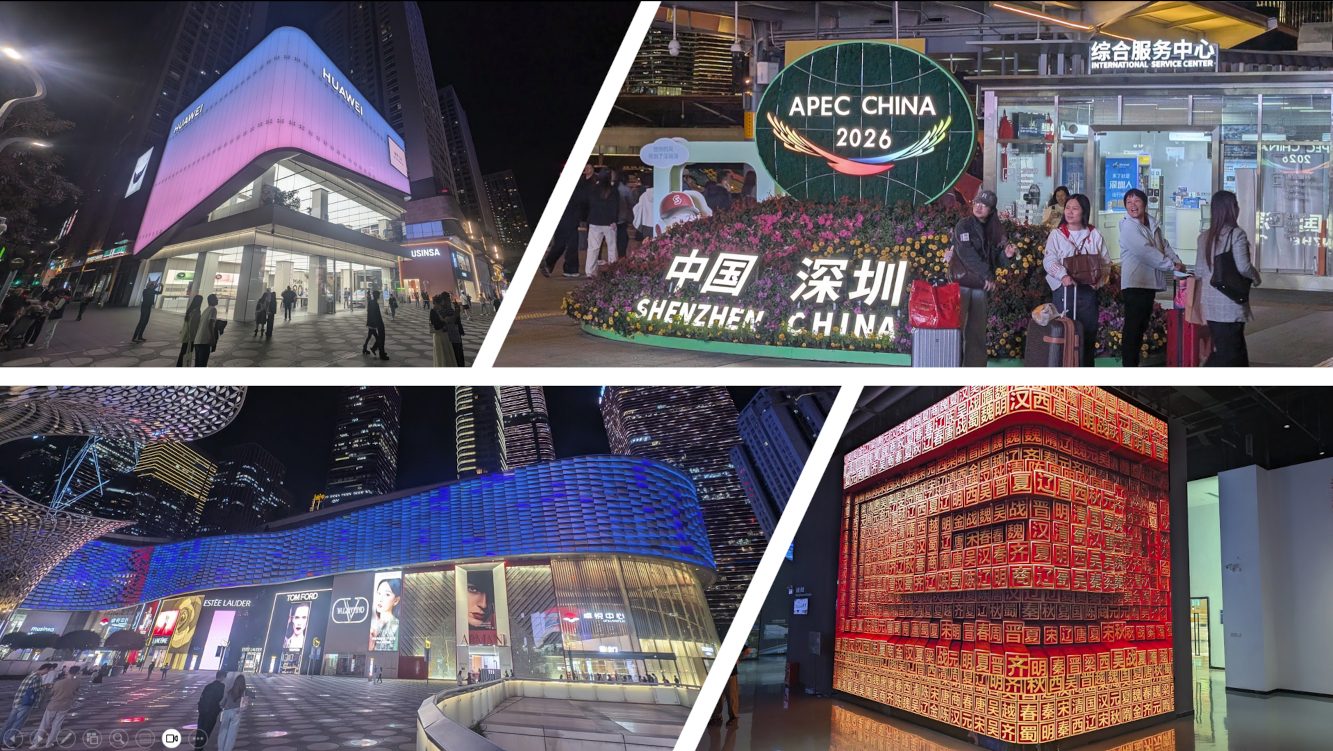
Shenzhen is hosting this week's APEC summit, and invidis used the occasion to look at what the city actually means for the digital signage supply chain. The short version: a lot more than most buyers of signage hardware probably realise.
According to invidis, Shenzhen and the surrounding Pearl River Delta concentrate nearly the entire digital signage value chain in one small geographic area. LCD panel factories, LED makers, mainboard suppliers, power supply specialists, cable manufacturers and enclosure fabricators sit within a short drive of each other. Companies named in the piece as based in or around the region include Absen, Unilumin, Maxhub and TCL. invidis says the proximity lets vendors go from idea to working prototype in a day or two, something that would take weeks to coordinate across suppliers in Europe or North America.
OEM giving way to ODM
The article's most useful point for operators and integrators is the shift from OEM to ODM sourcing. In an OEM arrangement, a brand designs a product and a manufacturer builds it. In ODM, the manufacturer designs and builds the product and the brand simply puts its name on it. invidis says this ODM model is now common across Shenzhen and Guangzhou suppliers, particularly for entry-level displays where margins are thin and differentiation is hard. The practical effect: many displays and media players sold under recognisable Western brand names, including firmware, SoC integration, remote management tools and even full content management systems, may originate from the same handful of Chinese technology providers, according to invidis. That matters for buyers comparing specs across brands, since products that look different on a spec sheet can share the same underlying design.
LED and the COB vs MIP question
On the LED side, invidis points to Shenzhen and Guangdong as the centre of global LED display manufacturing, with COB (Chip-on-Board) now the preferred approach for premium indoor displays under 1.5mm pixel pitch because of its durability and contrast. The article also flags MIP (MicroLED in Package) as an emerging alternative that blends SMD-style manufacturing economics with some of COB's image quality, positioned by suppliers as a bridge technology. For integrators specifying fine-pitch LED, this is a technology split worth tracking as more vendors market one approach or the other.
Costs and policy
invidis notes that China is no longer the cheapest place to manufacture, with countries like India and Vietnam often offering lower labour costs, and that some signage brands have already moved assembly elsewhere. But the piece argues that Shenzhen's density of engineering talent, suppliers and logistics still outweighs labour cost differences for many projects. It also cites Chinese government policy support for display and LED manufacturing as a continuing factor, alongside the earlier transfer of LCD manufacturing and patents from Korean firms to Chinese display makers.
The announcement does not name specific companies invidis visited beyond those mentioned, nor does it quantify how much of the global signage hardware market actually runs through Shenzhen-based ODM arrangements.
The announcement in full
Reproduced from invidis for reference. Digital Signage Magazine did not write the text below.
Shenzhen | As Xi, Trump and Putin gather in Shenzhen for the APEC summit this week, one industry will be watching particularly closely: digital signage. invidis was onsite to visit some of the industry’s well-known brands for a look behind the scenes.
To most observers, Shenzhen is China’s technology capital, home to global giants such as Huawei, Tencent, DJI and BYD. For the digital signage industry, however, Shenzhen is something even more important: it is the world’s manufacturing, engineering and innovation hub. Think of Absen, Maxhub, TCL or Unilumin.
invidis spends a week meeting manufacturers, software developers and solution providers across Shenzhen. Nowhere else in the world offers a comparable ecosystem for digital signage.
Many well-known digital signage brands market themselves as international technology companies. Yet a surprisingly large share of the industry’s hardware, components and even software originates in Shenzhen and the surrounding Pearl River Delta. The entire value chain is concentrated in one region.
LCD panel factories and display assembly lines operate alongside LED manufacturers. Mainboard suppliers, power supply specialists, cable manufacturers, and enclosure fabricators are often located within a short drive of each other. What might take weeks or months to coordinate in Europe or North America can often be organised in a matter of hours.
For digital signage vendors, Shenzhen offers something unique: immediate access to every component needed to turn an idea into a commercial product. If necessary from idea to prototype within a day or two.
The Shenzhen advantage extends far beyond manufacturing. Many international display brands source not only hardware but also firmware, system-on-chip integrations, remote management platforms and surprisingly even complete content management systems from local technology providers.
In many cases, technologies developed by Chinese specialists is white-labelled and sold worldwide under well-known international names. This ability to combine hardware engineering with software development has become increasingly important as digital signage evolves into a connected platform integrating AI, analytics, cloud services and remote device management.
As digital signage LCD and LED hardware becomes increasingly commoditized, many brands are shifting from OEM to ODM sourcing models. This trend is evident across manufacturers in Shenzhen and Guangzhou, where a growing number of global signage brands rely on products developed by third-party suppliers rather than investing in their own hardware design. Especially entry level products are often ODM’ed, as margins are low and differentiation difficult.
In an OEM model, the brand designs the product while a manufacturing partner builds it. In an ODM model, the manufacturer both designs and produces the product, while the brand sells it under its own name. The distinction matters because OEM-led companies typically retain greater intellectual property, product differentiation, and long-term competitive advantage, whereas ODM-based brands benefit from lower development costs and faster time-to-market but often compete with products that are fundamentally similar to those of their peers.
OEM: Global brand designs it, third party manufacturer builds it.
ODM: Third party manufacturer designs and builds it, the global brand adds it’s name.
While LCD displays remain the workhorse of the industry, LED is gaining market share and it is here where Shenzhen truly dominates. The city and surrounding Guangdong region have become the global centre of the LED display industry. Market leaders like Absen and Unilumin as well as hundreds of specialised suppliers are headquartered or manufacture here. While COB and COG manufacturing require considerable larger investment than SMD factories, the engineering and supply chain calls it’s home here.
As LED displays continue to move toward finer pixel pitches, manufacturers are increasingly promoting COB (Chip-on-Board) and MIP (MicroLED in Package) technologies. Both aim to improve visual performance, durability, and production efficiency, but they take fundamentally different approaches.
COB mounts LED chips directly onto the PCB and encapsulates them with a protective layer, delivering excellent durability, contrast, and black levels. It has become the preferred solution for many premium indoor applications below 1.5 mm pixel pitch. MIB, by contrast, combines the manufacturing advantages of traditional SMD packaging with some of the performance benefits of COB by integrating multiple micro-LED chips into ultra-small packages before mounting them to the board. This allows manufacturers to achieve high yields, easier repairs, and lower production costs while maintaining image quality close to COB. As a result, many Chinese LED suppliers now see MIB as a potential bridge technology between conventional SMD and full COB production.
One reason for Shenzhen’s success is its outward-looking business culture. Unlike many industrial clusters that primarily serve domestic demand, Shenzhen’s technology sector has been built around exports from the beginning. Manufacturers are accustomed to international standards, global logistics, OEM and ODM partnerships, and rapid product customisation for overseas markets.
This export orientation has helped transform local companies from contract manufacturers into globally recognised technology brands.
A young city with an entrepreneurial mindset
Only a three decades ago, Shenzhen was little more than a collection of fishing villages near Hong Kong. Today, it is a metropolis of more than 18 million people and one of the world’s leading technology centres.
Noteworthy is its demographic profile. Shenzhen remains one of China’s youngest major cities. Much of its population consists of migrants who arrived seeking opportunity, creating a business culture that is highly entrepreneurial, ambitious and focused on growth. The city’s energy feels fundamentally different from many established industrial regions.
China is no longer the low-cost manufacturing destination it was twenty years ago. Labour costs have increased substantially, and countries such as India and Vietnam often offer lower wages. That is why many digital signage brands moved manufacturing or better assembly away from China. Yet Shenzhen maintains significant advantages.
The combination of engineering talent, supplier density, logistics infrastructure and manufacturing experience continues to outweigh higher labour costs for many digital signage projects. The ability to design, prototype, test and scale products within a single ecosystem often delivers greater value than lower production costs elsewhere.
Another important factor is policy support. Professional displays, LED technology and broader digital infrastructure remain strategic priorities within China’s industrial development plans. The current five-year plan identifies digital signage as one of the key strategic technologies for sovereignty. Obviously more targeted at defense than retail media.
Local and national government programmes continue to support investment in advanced manufacturing, display technologies and export-oriented technology companies.
The massive government support made it uneconomical for Korea’s industry giants to manufacture LCD displays. Factories were first moved to China and in the past years – including the patents required for manufacturing – sold to China’s large display manufacturers.
With the decision to host APEC in Shenzhen, China delivers a message. It is using the summit to showcase a city that represents the country’s broader economic ambitions: innovation, advanced manufacturing, technology leadership and international trade.
For the digital signage industry, Shenzhen already embodies those ambitions. Whether the global brands like it or not, much of the global industry’s future remains connected to what happens in Shenzhen. From LED innovation and display manufacturing to software development and supply-chain resilience, the city continues to shape the technologies deployed in shopping centres, transport hubs, corporate workplaces and public spaces around the world.